Written by Craig Fearn
Director
Last updated: 26 March 2026
Part of our complete guide: 23 Restaurant Marketing Ideas That Fill Tables (Not Just Get Likes)
Your food could be brilliant. Your service, faultless. But if nobody sees it on their phone before they walk through your door, you’re losing covers to the place down the road that posts Reels every Tuesday. That’s the reality for UK restaurants right now. Social media doesn’t just build your brand - it fills tables.
This guide covers how to make social media work for a hospitality business. Not vague advice about ‘building a community’. Practical, platform-specific strategies that drive actual bookings. Whether you’re running a seaside bistro in Cornwall or a curry house in Birmingham, the principles are the same - and simpler than most agencies make them sound. For the bigger picture, see our complete hospitality promotion guide.
TL;DR
74% of diners choose where to eat based on social media, and 54.8 million UK adults use social platforms daily. Instagram is the strongest all-round platform for restaurants (78% UK reach). Post 3-5 times per week with a mix of food videos, behind-the-scenes content, and team spotlights. Consistency beats perfection - and every post should include a clear booking call to action.
| Platform | Best Content Type | Audience | Posting Frequency |
|---|---|---|---|
| Food photography, Reels, Stories | 18–44 year olds, foodies | 4–7 times per week | |
| Events, community posts, reviews | 30–65 year olds, local community | 3–5 times per week | |
| TikTok | Behind-the-scenes, prep videos | 16–34 year olds, viral reach | 3–5 times per week |
| Google Business Profile | Updates, offers, photos | Active searchers ready to book | 1–2 times per week |
Why Does Social Media Matter So Much for Restaurants?
Because 74% of diners now choose where to eat based on what they see on social media. That number comes from multiple industry studies in 2025, and it’s only going up. People don’t look at restaurant websites first. They scroll Instagram, watch short-video clips, or ask for recommendations in Facebook groups.
According to Ofcom’s Online Nation 2025 report, 54.8 million people in the UK use social media - roughly 79% of the population. They spend an average of one hour and 37 minutes a day scrolling. That’s an enormous window where your restaurant could show up in someone’s feed right as they’re thinking about dinner.
Here’s what makes restaurants different: food is inherently visual. A well-shot plate of pasta generates more engagement than almost any other content category. You don’t need a complicated strategy. Good light, a steady hand, and a dish worth photographing. The content creates itself every service.
Research from SevenRooms’ 2025 UK Restaurant Trends Report found that 45% of diners discover new restaurants through social media. And 68% check a restaurant’s social profiles before making a booking. If your last post was three months ago, that’s a red flag.
Which Platforms Should UK Restaurants Focus On?
Instagram, Facebook, and a short-video app - but you don’t need all three immediately. Pick two. Do them well. Add a third when you’ve built a rhythm. Trying to be everywhere at once is the fastest way to burn out and post nothing. Our guide to choosing the right platforms for your business goes deeper on this.
Instagram: Your Visual Shopfront
According to Ofcom’s 2025 Online Nation report, Instagram reaches 78% of UK adults, with the largest user group aged 25–34. For restaurants, it’s the strongest all-round platform. According to Socialinsider’s 2025 social media benchmarks, food content consistently outperforms other categories, and the average engagement rate for food and drink brands sits around 1.9% - more than five times the cross-industry median of 0.36%.
Reels are where the growth is. Short vertical videos of plating, sizzling pans, or a packed dining room get pushed to non-followers through Instagram’s algorithm. People who’ve never heard of your restaurant can discover it through a 15-second clip. Stories work too - daily specials, behind-the-scenes moments, polls asking what should go on next week’s menu.
One thing most restaurants get wrong: they only post food. Show the team. Show the prep. Show the empty restaurant at 6am when the bread’s going in. People connect with people, not just plates. Your social content should reflect a consistent brand identity - the same colours, voice, and personality across every post.
Facebook: Still the Community Hub
Don’t write Facebook off. According to DataReportal’s Digital 2025 UK report, Facebook reaches 85% of UK adults and averages 43 minutes of daily usage. Its audience skews older - 35 and above - which means people with disposable income who eat out regularly.
Facebook’s real strength for restaurants is local groups. Nearly every town and city in the UK has active community groups where people ask ‘where should we eat tonight?’ Being mentioned in those conversations is worth more than any paid ad. You can’t force it, but you can encourage it by responding to reviews, engaging with local posts, and running the occasional offer that’s worth sharing.
Facebook ads also remain effective for restaurants. Geo-targeted ads within a 10-mile radius of your location, showing a mouthwatering dish with a booking link, can fill quiet midweek slots. The average return across social platforms is around five pounds for every one pound spent, according to Birdeye’s 2025 analysis.
TikTok: The Discovery Engine
According to DataReportal’s 2025 UK data, the app reaches 56% of UK adults and is where restaurants go viral. Not every venue needs to be there. But if you’re targeting diners under 35, it’s hard to ignore: 41% of 18–24 year olds use the platform to discover new restaurants - more than Google for that age group.
The content that works here is different from Instagram. Less polished. More personality. A chef talking to camera about why they chose a specific ingredient. A time-lapse of the kitchen during a busy service. The format rewards authenticity over production quality - good news if you don’t have a marketing budget.
The numbers back it up: according to the platform’s own UK business data, 55% of users have visited a restaurant after seeing its content on the app, and 36% of UK users have ordered food directly because of something they saw. That’s not awareness. That’s revenue.
What Should Restaurants Actually Post?
A mix of five content types, rotated throughout the week, keeps your feed interesting without burning you out. The biggest mistake in most restaurant social media strategies is treating the feed like a menu board. It’s not. It’s a conversation.
1. Food in Action
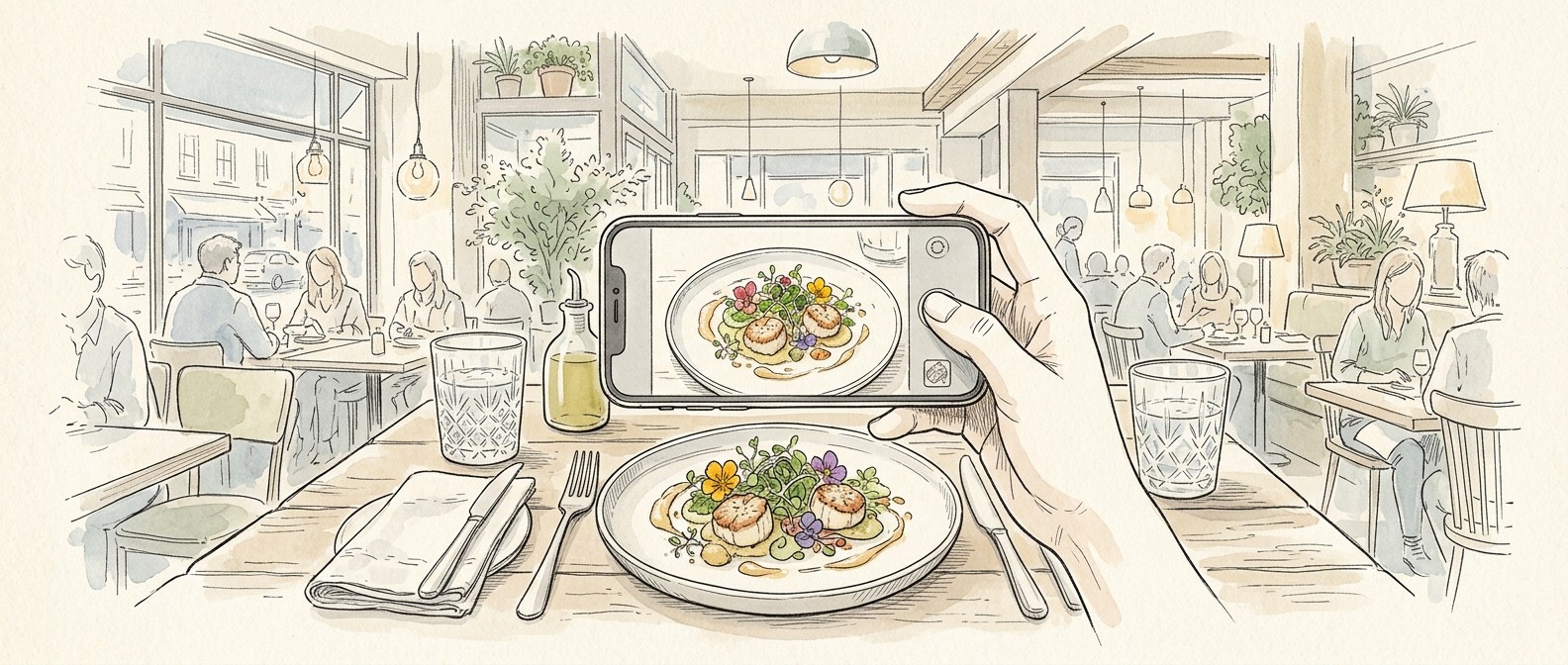
Not static shots of plated dishes on a white background. According to Sprout Social’s 2025 video statistics, video generates 1,200% more shares than text and image combined. Use it to showcase the moments that sell a meal: a steak hitting a hot pan, cheese pulling apart on a pizza, sauce being drizzled, steam rising. Movement triggers engagement. These clips don’t need professional equipment - a smartphone propped against a bottle, decent natural light, and 15 seconds of footage is enough.
2. Behind the Scenes
Customers love seeing how things work. According to Nosto (formerly Stackla) research, 86% of consumers say authenticity is a key factor when deciding which brands to support. The morning delivery arriving. Your sous chef prepping 200 portions of mise en place. The chaos of a Friday night kitchen. This content builds trust because it shows you’ve got nothing to hide. It also humanises your brand in a way that food photos alone can’t.
3. Team Spotlights
Introduce your people. According to Hootsuite’s 2025 Social Trends report, posts featuring real people generate 38% more engagement than those without. Your head chef’s favourite dish. The bartender’s new cocktail. The server who’s been with you since day one. People don’t develop loyalty to a logo. They develop loyalty to people they feel they know. A 30-second ‘meet the team’ Reel each month gives your regulars something to connect with and potential customers a reason to visit.
4. User-Generated Content
When customers tag you in their posts, share it. This is free content that acts as social proof - real people enjoying real meals at your restaurant. Encourage it with a branded hashtag, a sign near the entrance, or a gentle mention on the bill. According to Cropink’s 2025 restaurant statistics, 86% of diners post about their meal if it looks good enough. Make it look good enough.
5. Seasonal and Limited-Time Offers
New menu items. Weekend specials. Valentine’s Day prix fixe. Bank holiday brunch. Seasonal content creates urgency and gives people a reason to book now rather than ‘sometime’. It also gives the algorithm fresh material to push, which keeps your reach from stagnating. Our seasonal hospitality promotion calendar maps content month by month around key dates.
How Often Should a Restaurant Post on Social Media?
Three to five times per week on the visual platforms. Two to three times on Facebook. Consistency matters far more than frequency. Posting every day for a fortnight then vanishing for a month does more harm than three posts a week, every week.
Research consistently points to three posting windows: 9am (people planning their day), noon to 1pm (lunch hour scrolling), and 5pm to 8pm (evening meal decisions). Get your content in front of people when they’re choosing where to eat.
Here’s a realistic weekly schedule that won’t overwhelm a busy kitchen team:
- Monday: Behind-the-scenes prep or delivery arrival (Story or Reel)
- Tuesday: Feature dish with short video (Feed post + Reel)
- Wednesday: Team spotlight or customer repost (Feed post)
- Thursday: Weekend special teaser or booking reminder (Story)
- Friday: Atmosphere shot - busy dining room, cocktails being made (Reel)
That’s five posts. None of them takes more than ten minutes to create during or after service. The person holding the phone doesn’t need to be a social media manager. They need to be someone who understands the food and isn’t afraid of being on camera.
How Can Restaurants Turn Likes Into Actual Bookings?
By making booking easy, using clear calls to action, and treating social media as a sales channel - not just a brand awareness tool. Likes are nice. Bookings pay the bills.
Every post should make it obvious how to book. Put your booking link in your bio. Add it to Stories. Mention it in captions. ‘Table for tonight? Link in bio.’ It sounds repetitive, but people need to be told what to do next. Don’t assume they’ll figure it out. Your restaurant website should make the booking process effortless once someone clicks through.
Location tags matter enormously. When you tag your restaurant in every post, people browsing that location see your content. Tourists searching for ‘restaurants near me’ on Instagram will find tagged posts before they find your website. Always tag.
Respond to comments and messages quickly. According to industry research, 73% of diners will choose a competitor if a restaurant doesn’t respond online. Someone asks ‘do you have outdoor seating?’ and you don’t reply for three days? They’ve already eaten somewhere else.
Exclusive social-only offers work too. A discount code in your Stories. A secret menu item you only mention on one channel. These give followers a reason to keep watching and let you track which platform drives the most bookings.
Should Restaurants Work With Food Influencers?
Yes, but micro-influencers - not celebrities. UK brands working with micro-influencers (accounts with 10,000–100,000 followers) see engagement rates up to four times higher than those using celebrity endorsements. And they cost a fraction of the price.
For restaurants, the best partnerships are local. A food blogger with 15,000 followers in your city is worth more than a national account with 500,000. Their audience is nearby. Their recommendations carry weight because they’re seen as genuine. Invite them for a meal, let them photograph it, and watch the bookings come in.
Give each influencer a unique discount code so you can measure exactly how many bookings they generate. If a complimentary meal costs you forty pounds and generates fifteen bookings, the maths is straightforward. For more on building local partnerships and word-of-mouth strategies, see our guide to attracting restaurant customers.
What Mistakes Kill Restaurant Social Media?
Inconsistency, poor photography, and ignoring your audience. These three problems account for most failed restaurant social media accounts.
Inconsistency is the biggest killer. Posting ten times in one week then nothing for a month tells the algorithm you’re not a serious account. It tells potential customers you might be closed. Set a schedule and stick to it, even if it’s only three posts a week.
Bad photos hurt more than no photos. A dark, blurry shot of a plate under yellow fluorescent lighting makes your food look unappetising regardless of how good it tastes. You don’t need a professional photographer. You need natural light, a clean background, and a phone made in the last three years. That’s it.
Ignoring comments and messages signals that you don’t care. If someone compliments your food, thank them. If someone complains, respond professionally. Every interaction is visible to hundreds of potential customers. For more advice on avoiding these pitfalls, our social media marketing guide for small businesses covers the fundamentals.
How Do You Measure Whether It’s Working?
Track reach, engagement, and - most importantly - bookings that come from social channels. Vanity metrics feel good but don’t pay rent.
The metrics that matter for restaurants are:
- Booking link clicks: How many people tapped your reservation link from social media
- Profile visits: How many people visited your profile after seeing a post
- Reach vs. engagement: Are people seeing your content? Are they interacting with it?
- DMs and comments asking about bookings: Direct signals of purchase intent
- Website clicks from social: Track these in Google Analytics
Ask new customers how they found you. A simple ‘how did you hear about us?’ at booking goes a long way. Combine this with tracking data from your booking platform and you’ll have a clear picture of what’s working.
Review your analytics monthly. Not daily - that leads to reactive decisions based on single posts rather than trends. Do more of what works. Stop doing what doesn’t. Content marketing is a long game, and monthly reviews keep you on track.
Frequently Asked Questions
How much should a restaurant spend on social media marketing?
Organic posting costs nothing but time. Most independent restaurants manage their own social media in one or two hours per week. For paid ads, start with fifty to one hundred pounds monthly on geo-targeted campaigns and measure results before increasing spend. Larger operations might budget two hundred to five hundred pounds, including ad spend and content creation.
Can you do restaurant social media marketing without video?
You can, but you’ll be fighting an uphill battle. Every platform’s algorithm favours video in 2026 - short clips and Reels all pull significantly more reach than static images. The good news is restaurant video doesn’t need to be complicated. A 10-second shot of a dish being plated, filmed on a phone, outperforms a perfectly staged photo nine times out of ten.
Should restaurants respond to negative comments on social media?
Always. And quickly. A professional, empathetic response to a complaint can actually boost your reputation more than the complaint damages it. Acknowledge the issue, apologise sincerely, and offer to make it right publicly. Then take the conversation to DMs to resolve the specifics. Other customers are watching how you handle criticism, and a thoughtful response shows confidence and professionalism.
Which social media platform is best for restaurants in 2026?
Instagram is the strongest all-round platform for most restaurants. It reaches 78 percent of UK adults, food content consistently outperforms other categories, and Reels push your content to non-followers through the algorithm. If your audience skews under 35, add a short-video app. If you rely on local community engagement, Facebook still matters. Pick two and do them well rather than spreading yourself thin across all three.
How often should a restaurant post on social media?
Three to five times a week on Instagram and short-video. Two to three on Facebook. Consistency beats frequency. Posting every day for a fortnight then vanishing for a month does more harm than three posts a week, every week. Batch your content in one Monday session to stay on track.
Do restaurants need to use video on social media?
Strongly recommended. Every platform’s algorithm favours video in 2026 - short clips and Reels outpull static images by a wide margin. The good news is restaurant video doesn’t need to be complicated. A 10-second shot of a dish being plated, filmed on a phone, outperforms a perfectly staged photo nine times out of ten.
Ready to Fill More Tables?
None of this is complicated. It’s about showing up consistently, posting content that makes people hungry, and making it dead simple to book a table. You don’t need an agency for that. You need a plan, a phone, and ten minutes a day.
If you’d rather hand the strategy to someone else and focus on running your restaurant, we help UK hospitality businesses build a social media presence that drives real bookings - not vanity metrics. Our social media management work covers content creation, scheduling, community responses, and reporting. From content creation to restaurant SEO and email marketing, we handle the digital side so you can focus on the kitchen. We work with hospitality businesses across Truro, Falmouth, Newquay, and the wider South West.
Get in touch to talk about your restaurant’s social media strategy. No jargon. No hard sell. Just a conversation about what’s possible.
Cornwall restaurant owner?
See our dedicated restaurant marketing Cornwall service page for local SEO, Google Business Profile management and website design tailored to Cornwall restaurants, cafes and pubs.
Need help with this?
We work with Cornwall small businesses on the exact challenges covered in this article. Free 30-minute call, no pressure.
Get in touchCraig Fearn
Director
Craig is Director of Outcome Digital Marketing. He brings over a decade of C-suite advisory experience, having advised senior executives and boards on organisational strategy before focusing on the marketing decisions that move the needle for smaller businesses. As a Fellow of the Royal Society for Public Health (FRSPH) and Fellow of the Chartered Management Institute (FCMI), he applies evidence-based thinking to marketing - helping Cornwall and UK businesses make informed decisions backed by research, not hype.