
Written by Craig Fearn
Director
Last updated: 26 March 2026
Part of our complete guide: Digital Marketing in Cornwall: The Local Playbook Agencies Do Not Want You to Read
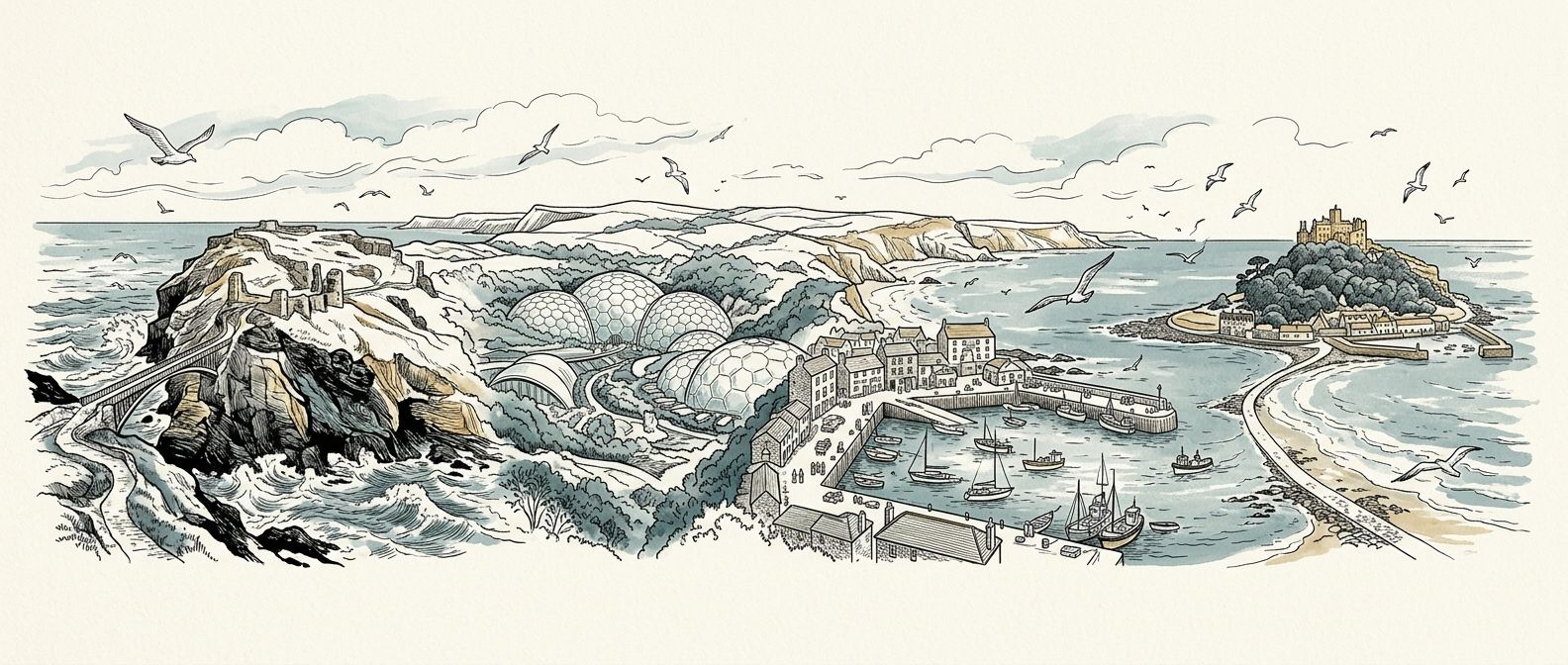
Cornwall has more famous landmarks per square mile than almost anywhere in England. From a tidal island you can only reach on foot at low tide to a castle perched on cliffs where King Arthur supposedly drew his first breath, these are the places that give Cornwall its identity. Over 5.3 million visitors come to Cornwall each year (Visit Cornwall, 2024), and most of them are heading for these spots.
But there’s a difference between visiting a Cornwall landmark and actually knowing it. This guide comes from someone who lives here. We’ll cover what makes each place worth your time, what the crowds don’t tell you, and when to go. If you’re a local business owner, understanding what draws people to Cornwall helps you connect with the county’s tourism economy - the backbone of many local enterprises.
TL;DR
Cornwall’s top landmarks include St Michael’s Mount, Tintagel Castle, the Eden Project, the Minack Theatre, Land’s End, Godrevy Lighthouse, the Tate St Ives, Padstow Harbour, Bodmin Moor and Kynance Cove. Each one draws hundreds of thousands of visitors annually, making tourism Cornwall’s largest industry.
St Michael’s Mount, Marazion
A tidal island topped with a medieval castle and sub-tropical gardens. You walk across a granite causeway at low tide. At high tide, you take a boat. That alone makes it unforgettable. The St Aubyn family has lived here since 1659, and the National Trust manages the property in partnership with them.
What most tourists miss: the harbour village at the base. There’s a tiny community of about 30 people who still live on the island. Walk around the back, away from the main path, and you’ll find garden terraces with plants that shouldn’t survive this far north - but do, thanks to the Gulf Stream. Visit early morning in spring or autumn. Summer queues can stretch an hour.
Tintagel Castle
Tintagel is where legend and geology collide. The ruins sit on a headland connected to the mainland by a footbridge that opened in 2019 - before that, visitors climbed a steep staircase carved into the rock. English Heritage manages the site, and it pulls in around 250,000 visitors annually.
The Arthurian connection? Probably myth. But the 13th-century castle is real, and archaeological digs have uncovered evidence of a wealthy Dark Ages settlement trading with the Mediterranean. The cliffs are genuinely dramatic. Go on a windy day in October and you’ll understand why someone invented a legend here. The village itself is touristy - cream teas and gift shops - but the coastline either side is wild and empty.
The Eden Project, Bodelva
Two enormous biomes sitting in a reclaimed clay pit near St Austell. One houses a tropical rainforest. The other, a Mediterranean environment. It opened in 2001 and has drawn over 22 million visitors since. It’s an education centre, concert venue, and one of Cornwall’s biggest employers.
Locals sometimes dismiss it as “for tourists.” That’s a mistake. The outdoor gardens are genuinely beautiful and change through the seasons. The ice rink in winter is a family tradition for half of mid-Cornwall. Best tip: go on a weekday in term time. The biomes are designed for about 2,000 people and they’re far more enjoyable without 6,000. Annual passes make sense if you live here - the gardens alone are worth repeat visits.
The Minack Theatre, Porthcurno
An open-air theatre carved into the granite cliffs above Porthcurno beach. Built almost single-handedly by Rowena Cade from the 1930s onwards. She hauled materials down the cliff on her back. The stage sits 100 feet above the Atlantic. There isn’t another theatre like it anywhere in the world.
Seeing a show here is non-negotiable if you live in Cornwall. Shakespeare works best - something about the drama of the setting suits it. Bring a blanket. It gets cold even in July once the sun drops behind the headland. The beach below, Porthcurno, has sand so white it looks Caribbean. Combine the two for a full day.
Land’s End
The most westerly point of mainland England. Granite cliffs dropping into the Atlantic with views to the Isles of Scilly on a clear day. It’s been a destination since the 1600s. Today it attracts around 400,000 visitors per year.
The commercial complex at Land’s End itself is, frankly, disappointing. A theme park bolted onto one of England’s most dramatic natural sites. Skip the attractions. Walk south along the coast path towards Sennen and you’ll find the real Land’s End - raw, windswept, and beautiful. The signpost photo costs about £12. Some things are worth paying for. This isn’t one of them.
Godrevy Lighthouse
This white lighthouse sits on Godrevy Island, just off the coast near Hayle. Virginia Woolf saw it as a child and it inspired To the Lighthouse. The lighthouse itself isn’t open to visitors, but the headland walk gives you perfect views.
What makes Godrevy special isn’t just the lighthouse. The beach stretches for three miles, and grey seals haul out on the rocks below the cliffs between autumn and spring. Bring binoculars. On a good day you’ll count 50 or more. It’s also one of the best sunset spots in Cornwall - the lighthouse silhouetted against an orange sky is worth the drive from anywhere in the county.
Tate St Ives
Reopened in 2017 after a £20 million expansion, the Tate St Ives sits above Porthmeor Beach and houses modern and contemporary art connected to the St Ives school of artists. The building alone is worth the visit - huge windows frame the Atlantic like living paintings.
Don’t miss the Barbara Hepworth Museum and Sculpture Garden, which is included in the ticket price. It’s a five-minute walk away and shows where Hepworth lived and worked. The studio is exactly as she left it. For a small gallery, it packs an emotional punch that larger London institutions often lack.
Padstow Harbour
Padstow was a working fishing harbour long before it became a foodie destination. The harbour is still active - watch the boats come in with the day’s catch. But yes, the food is the draw now. Multiple restaurants line the harbour, and the Camel Trail cycling path starts (or ends) here.
The secret to Padstow: go in the evening. Day trippers flood the town between 11am and 4pm in summer, and parking becomes a contact sport. After 5pm, the crowds thin and the harbour becomes genuinely pleasant. Walk around to St George’s Cove for views back across the Camel Estuary. The Obby Oss festival on May Day is one of Cornwall’s oldest traditions - chaotic, joyful, and nothing like anything you’ve seen before.
Bodmin Moor
Cornwall’s wild interior. Granite tors, Bronze Age stone circles, and the kind of emptiness that feels rare in southern England. Brown Willy is Cornwall’s highest point at 420 metres. The moor covers 208 square kilometres and has been inhabited for over 10,000 years.
Then there’s the Beast. Sightings of a large cat roaming Bodmin Moor have been reported since the 1970s. Real or not, it adds to the atmosphere. The Cheesewring - a natural stack of balanced granite slabs near Minions - looks like someone built it as a joke. It formed naturally. The moor is empty most of the year. That’s the appeal. Pack properly, though. Weather changes fast up here.
Kynance Cove, Lizard Peninsula
Turquoise water, dark serpentine rock stacks, and white sand. Kynance Cove looks like it belongs in the Greek islands, not on the south coast of Cornwall. It’s managed by the National Trust and sits on the Lizard Peninsula - the most southerly point of mainland Britain.
Timing matters here. The cove is tidal, and the best beaches disappear at high water. Check the tide tables and aim for two hours either side of low tide. The serpentine rock is a deep green-red mineral unique to this part of Cornwall - you can buy polished pieces in the village. Swimming is possible but the water is always cold. Always. Even in August. Bring a wetsuit or bring stubbornness.
Other Landmarks Worth Your Time
The ten above are the headline acts, but the county’s landmark list is longer than any single guide can cover. A few more that locals would pick over the obvious tourist spots:
- Pendennis Castle, Falmouth - Henry VIII-era artillery fort guarding the mouth of the Carrick Roads, the third-deepest natural harbour in the world. English Heritage manages it. Pair with the National Maritime Museum in Falmouth for a half-day.
- Lizard Point - The most southerly point of mainland Britain, with serpentine cliffs and a working lifeboat station. Walk west along the coast path to Kynance Cove for one of the finest two-mile stretches of coastal scenery in the South West.
- Mevagissey Harbour - A working fishing village south of St Austell that quietly does what Padstow does, with fewer crowds and lower prices. The inner and outer harbours fill at high tide and empty at low - photogenic either way.
- Penzance and Newlyn - Penzance is the rail terminus, the gateway to Land’s End, and home to the recently restored Jubilee Pool. Newlyn next door is still Cornwall’s biggest active fishing port and the spiritual home of the Newlyn School of late-Victorian painters.
- The South West Coast Path - Not a single landmark but a 300-mile thread linking almost every Cornish coastal landmark on this list. Pick any 5-mile section between Easter and October and you have an afternoon better than most theme parks.
Planning Your Cornwall Landmark Visit
Cornwall’s geography means you can’t see everything in a day. The county is roughly 80 miles long and the A30 - the only dual carriageway - runs down the spine. Everything else is single-lane roads. Allow at least 45 minutes between landmarks that look close on a map, and double that in July and August when traffic backs up behind caravans.
A rough grouping that works: West Cornwall (St Michael’s Mount, Minack Theatre, Land’s End, Godrevy) can fill two or three days. Mid Cornwall (Eden Project, Bodmin Moor) is a day each. North Cornwall (Tintagel, Padstow) combines well as a two-day trip. South Cornwall (Kynance Cove, the Lizard) deserves its own day. Tate St Ives fits into a west Cornwall itinerary or a standalone day trip.
Parking is the consistent headache. Almost every landmark charges for parking separately from admission. National Trust members get free parking at their sites. Others range from £3 to £8 per day. In summer, arrive before 10am or after 3pm at popular spots. The difference between a peaceful visit and a stressful one is often just timing.
What Cornwall’s Landmarks Mean for Local Businesses
Tourism isn’t separate from the Cornwall economy. It is the Cornwall economy, generating over £2.2 billion annually and supporting around 39,000 jobs (Visit Cornwall). Every one of these landmarks creates demand for accommodation, food, transport, and services. If you run a business in Cornwall, understanding where visitors go - and when - helps you capture that demand through your marketing strategy.
Seasonal patterns matter enormously. Searches for “things to do in Cornwall” start climbing in March, peak in July, and drop off sharply by October. Accommodation businesses, restaurants, activity providers, and even tradespeople doing holiday let maintenance should plan their marketing calendars around these patterns. The businesses that show up in search results before the peak - not during it - capture the early bookers who spend more.
Frequently Asked Questions
What’s the most visited landmark in Cornwall?
The Eden Project consistently draws the highest visitor numbers, with over a million people per year. St Michael’s Mount and Tintagel Castle follow close behind. Land’s End attracts around 400,000 annually, though many visitors walk the coast path for free rather than entering the paid attractions.
Are Cornwall landmarks free to visit?
Some are. Land’s End, Godrevy, Kynance Cove and Bodmin Moor are free to visit (parking charges may apply). National Trust and English Heritage sites like St Michael’s Mount and Tintagel Castle charge admission or require membership. The Eden Project and Minack Theatre charge for entry and shows. The Tate St Ives has an admission fee. National Trust and English Heritage memberships pay for themselves quickly if you’re visiting regularly.
Best time to visit Cornwall landmarks?
May, June and September. You get longer days and decent weather without the school holiday crowds of July and August. Spring wildflowers along the coast path peak in May. Autumn colour on Bodmin Moor is best in October. Winter visits have their own charm - dramatic storms at Land’s End and empty beaches everywhere - but check opening times as some attractions close or reduce hours between November and March.
Dog-friendly Cornwall landmarks?
Bodmin Moor, Godrevy, and the coast path sections around Land’s End and Kynance Cove are dog-friendly year-round. The Eden Project allows dogs in the outdoor gardens but not inside the biomes. The Minack Theatre doesn’t allow dogs during performances. National Trust properties vary - check their website before visiting. Many beaches have seasonal dog restrictions from Easter to October, but there are always dog-friendly alternatives nearby.
Can you visit all these landmarks in one trip?
You could cover them all in a week, but you’d be rushing. Cornwall’s roads are slow - the A30 is the only dual carriageway, and everything else is single-lane. A better approach: pick a base in west Cornwall (Truro works well) and do three or four landmarks properly, rather than ten in a blur.
Need help with this?
We work with Cornwall small businesses on the exact challenges covered in this article. Free 30-minute call, no pressure.
Get in touchCraig Fearn
Director
Craig is Director of Outcome Digital Marketing. He brings over a decade of C-suite advisory experience, having advised senior executives and boards on organisational strategy before focusing on the marketing decisions that move the needle for smaller businesses. As a Fellow of the Royal Society for Public Health (FRSPH) and Fellow of the Chartered Management Institute (FCMI), he applies evidence-based thinking to marketing - helping Cornwall and UK businesses make informed decisions backed by research, not hype.