
Written by Craig Fearn
Director
Last updated: 26 March 2026
Part of our complete guide: SEO Fundamentals for UK Small Businesses: The 7 Things Google Actually Cares About
Most businesses see meaningful movement in 3 to 6 months. According to Ahrefs research, 72.9% of pages in Google’s top 10 are over 3 years old, and only 1.74% of newly published pages reach the top 10 within their first year. SEO rewards patience and consistent effort.
SEO takes time because Google rewards trust, and trust is earned slowly. This guide explains realistic timelines, what affects how quickly your SEO efforts pay off, and what to expect along the way.
TL;DR
60% of SEO practitioners report initial ranking improvements within 4 to 6 months (SEO.com). The average top-10 page is now over 3 years old (Ahrefs). Technical SEO can shift positions within weeks. Content SEO takes months. Local businesses targeting low-competition keywords can see movement within 3 months, while competitive national terms often take 12+ months. Track keyword positions in your SEO tools rather than traffic in the early months.
Why Does SEO Take So Long?
Google needs time to crawl your changes, evaluate them against competitors, and build trust in your site’s authority. Rankings aren’t awarded instantly - they’re earned through sustained signals.
When you make SEO improvements, Google does not notice immediately. Crawlers need to revisit your site. Changes get indexed. Then Google tests whether your pages deserve higher rankings by showing them to some searchers and measuring engagement signals like click-through rate and dwell time.
According to Ahrefs’ updated study, the average page ranking in the top 10 is now over 3 years old - up from 2 years in their 2017 analysis. Only 1.74% of newly published pages manage to reach the top 10 within their first year, down from 5.7% previously. This trend reflects Google increasingly favouring established, proven content over fresh but untested pages.
What Results Can You Expect and When?
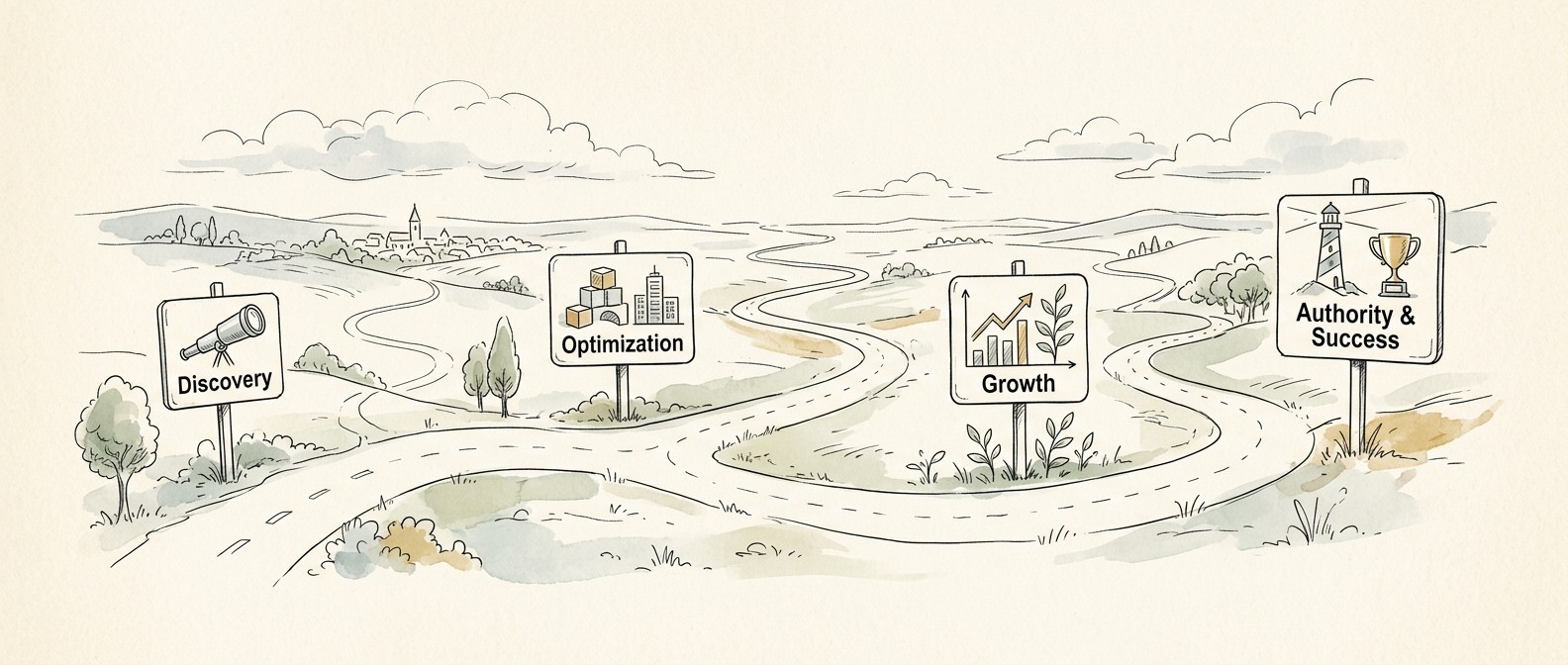
Technical fixes deliver movement fastest, often within weeks. Content improvements and authority building take progressively longer, with meaningful organic traffic growth typically appearing between months 3 and 6 as your SEO work matures.
Weeks 1-4: Technical fixes - speed improvements, mobile issues, broken links, and cleaning up your URL structure - can show impact within weeks. Google recrawls regularly and notices these changes relatively quickly.
Months 1-3: Content improvements and on-page optimisation start showing movement. You might see rankings improving from page 5 to page 2. Traffic increases begin but aren’t dramatic yet.
Months 3-6: This is where meaningful results typically emerge. Rankings move onto page 1 for lower-competition terms. Traffic growth becomes noticeable. Patterns in what’s working become clear.
Months 6-12: Compound effects kick in. Content built earlier attracts links naturally. Rankings improve for more competitive terms. Traffic growth accelerates as more pages rank well.
| Timeframe | Activity | Expected Results |
|---|---|---|
| Weeks 1-4 | Technical fixes, speed improvements | Crawl improvements, minor ranking shifts |
| Months 1-3 | On-page optimisation, content updates | Rankings move from page 5 to page 2 |
| Months 3-6 | Content publishing, link earning | Page 1 rankings for low-competition terms |
| Months 6-12 | Authority building, competitive terms | Traffic growth accelerates, compound gains |
| Year 2+ | Maintenance and expansion | Established authority, easier to rank new content |
Technical SEO vs Content SEO: Why They Move at Different Speeds
The technical side typically takes weeks to see results. Content work usually takes months. The split matters because most owners blame the whole SEO strategy when only one half is slow.
The technical side covers crawlability, site speed, mobile usability, indexation, structured data, and broken links. Like Google does for any well-built site, the crawler notices these fixes the next time it visits - often within days. If a page was blocked by robots.txt or buried five clicks deep, removing the blocker can lift positions almost immediately. Fixing crawl barriers is the closest thing to a quick win the discipline offers.
The content side covers the topics you write about, how thoroughly you cover them, and the links you earn. This half takes time because the algorithm wants to see whether real users find your pages useful. New articles can take months to mature - they get indexed quickly, but earning trust signals like dwell time, return visits, and backlinks does not happen overnight. Most SEO success stories are content stories that took 9 to 18 months of patient work.
The practical takeaway: front-load the technical fixes in months 1 to 2 to clear quick wins, then run a steady content cadence for the rest of the year. A balanced approach gives visible early movement and compounding long-term gains.
What Factors Affect How Long SEO Takes?
Competition level, your starting point, resources invested, and content quality all determine your timeline. According to SEO.com, 60% of SEO practitioners report seeing initial ranking improvements within 4 to 6 months.
Competitive industries take longer. Ranking for “injury lawyer London” is much harder than “plumber Bodmin.” More competition means more established sites with years of authority to overcome. Local brick-and-mortar businesses can see keyword ranking improvements within 3 months for local searches, while professional services firms in major cities often need 9 to 12 months for competitive terms.
Your starting point matters too. A new website starts from zero authority. An established site with existing rankings and backlinks has a foundation to build on. Local SEO for a business in a small town moves faster than national campaigns against big brands.
| Scenario | Example Keyword | Typical Timeline | Difficulty |
|---|---|---|---|
| Local, low competition | ”plumber Bodmin” | 2-4 months | Low |
| Local, moderate competition | ”SEO Cornwall” | 4-8 months | Medium |
| Regional, moderate competition | ”web design Devon” | 6-10 months | Medium-High |
| National, high competition | ”injury lawyer London” | 12+ months | Very High |
Understanding how much SEO costs helps set realistic expectations alongside these timelines. The investment required scales with competition level.
Can You Speed Up SEO Results?
To some extent. A well-resourced SEO strategy with better content, on-page SEO refinement, and stronger link-building accelerates progress. But there are hard limits that no amount of spending can bypass, because Google takes time to verify that fresh signals are genuine.
Publishing more high-quality content gives Google more pages to rank - businesses that blog receive 55% more website visitors according to HubSpot. Earning links from reputable sites builds authority faster. Fixing technical issues immediately removes barriers. There’s a correlation between investment and speed of results. While organic rankings build, maintaining an active presence on the right social media platforms keeps your brand visible and drives referral traffic in the interim.
But there are limits. Google deliberately prevents gaming the system. You can’t buy your way to instant authority. Trying to shortcut the process - buying links, spinning content, using black-hat tactics - risks penalties that set you back further than if you’d done nothing.
How Do You Know If SEO Is Working?
Track leading indicators like keyword positions and impressions, not just traffic. Early progress is often invisible in traffic numbers but measurable in ranking data.
Early on, traffic might not change much while rankings improve. Track keyword positions - are you moving from position 45 to position 20? That’s progress, even if clicks haven’t increased yet. According to First Page Sage, the top organic result captures nearly 40% of all clicks - the jump from position 20 to position 5 brings the real traffic surge.
Use Google Search Console to track impressions (how often your pages appear in search results) and average positions. Impressions increasing means Google is showing you more. Positions improving means you’re moving up rankings.
Which SEO Tools Help You Spot Progress Early?
Free monitoring platforms are enough for most small businesses in the first year. The point is not data volume - it is catching early movement that proves your strategy is working before traffic arrives.
Search Console is the most important of the lot. It shows the queries you appear for, your average position, click-through rate, and how often new pages get indexed. Check it weekly. Rising impressions on target queries are usually the first sign that your SEO efforts are landing, often weeks before traffic shifts.
Google Analytics 4 tracks what visitors do once they land - which pages convert, which bounce, which keep people on the site. Bing Webmaster Tools mirrors the same data for Bing and is worth a five-minute weekly check. PageSpeed Insights flags Core Web Vitals issues that hold the technical side back. Paid platforms like Ahrefs, Semrush, or Ubersuggest add competitor data and rank tracking, but they are not essential while you are still building momentum.
The trap with monitoring is dashboard paralysis. To measure SEO progress sensibly, track three numbers: average position for your top 10 keywords, total impressions, and indexed page count. If those climb quarter on quarter, your SEO campaign is doing its job. For local businesses, also watch your Google Business Profile insights - calls, direction requests, and profile views. Everything else is noise.
What If Nothing’s Happening After 6 Months?
Either something is wrong with execution, or you are targeting keywords that are unrealistically competitive for your current domain authority. SEO is an ongoing process, and many SEO campaigns stall because the audit step gets skipped.
No improvement after 6 months of consistent effort suggests problems. Technical issues might be blocking crawling. Content might not match what searchers want. You might be targeting keywords you can’t realistically compete for yet. From our work with Cornwall businesses, we find that recalibrating keyword targets - moving from highly competitive national terms to achievable local search terms - often helps a page rank in search results within weeks. Most SEO experts will start with an audit before changing tactics.
This is when professional help can identify what is wrong. At Outcome Digital Marketing, we audit sites to find what is blocking progress and provide clear recommendations for fixing it.
For more on getting started with SEO, explore our complete guide or see practical improvements you can make today. If you are weighing up SEO against paid advertising, understanding timelines is essential for setting realistic expectations. Our on-page SEO checklist covers the quick wins, while our beginner’s guide to SEO explains the fundamentals. For businesses in Cornwall and Devon, our location pages for Truro, Plymouth, and Exeter cover what we offer locally.
Frequently Asked Questions
How long does SEO take to show results?
Most businesses start seeing results within 3 to 6 months. Technical fixes can show impact within weeks. Content and link-building results compound over 6 to 12 months. Local businesses targeting low-competition keywords often see faster movement than national campaigns.
Why does SEO take longer than paid ads?
Paid ads deliver instant visibility because you’re buying placement. SEO requires Google to crawl your changes, evaluate them against competitors, and build trust in your domain. This process can’t be rushed. The trade-off is that organic rankings persist without ongoing per-click costs.
Can I speed up my SEO results?
To some extent. Publishing high-quality content faster, fixing technical issues immediately, and earning backlinks from reputable sites all accelerate progress. However, there are hard limits. Trying to shortcut the process with purchased links or automated content risks penalties that set you back further.
How do I know if my SEO is working?
Track keyword positions in Google Search Console. If you are moving from position 45 to position 20, that is progress even before traffic increases. Rising impressions and improving average positions are the leading indicators. Traffic growth follows once you reach page one.
Does local SEO take less time than national SEO?
Usually yes. Local searches have less competition because you are only competing against businesses in your area, not the entire country. Local brick-and-mortar businesses often see ranking improvements within 3 months, especially for specific town-level keywords where few competitors are optimising.
What happens if I stop doing SEO after 6 months?
Rankings don’t disappear immediately, but they will decline over time as competitors continue optimising and your content becomes outdated. SEO is most effective as an ongoing investment. The compound returns mean that stopping after building momentum wastes much of the initial effort.
Need help with this?
We work with Cornwall small businesses on the exact challenges covered in this article. Free 30-minute call, no pressure.
Get in touchCraig Fearn
Director
Craig is Director of Outcome Digital Marketing. He brings over a decade of C-suite advisory experience, having advised senior executives and boards on organisational strategy before focusing on the marketing decisions that move the needle for smaller businesses. As a Fellow of the Royal Society for Public Health (FRSPH) and Fellow of the Chartered Management Institute (FCMI), he applies evidence-based thinking to marketing - helping Cornwall and UK businesses make informed decisions backed by research, not hype.